
Culture Starts Here, Ep5: For Leaders, This Can Make the Difference Between a Guess and a Smart Decision [podcast video]
Actionable people data: A catalyst for high-performing culture
Culture is not a vibe. It’s not a poster on the wall. And it’s not something leaders should talk about only when engagement scores dip or turnover spikes.
Culture is built and sustained by what leaders do every day.
At ADVISA, we believe culture becomes a true competitive advantage when leaders have the clarity, insight, and discipline to act with intention. And one of the most overlooked drivers of that clarity is Actionable People Data.
This idea isn’t new to us. In fact, it’s foundational.
This episode of Culture Starts Here, with ADVISA CEO Heather Haas and leadership consultant BJ McKay, starts with ADVISA’s origin story.
From our earliest days helping leaders understand themselves and others through behavioral data, we’ve seen one truth play out again and again:
When leaders have meaningful insight into how people are wired – and actually use it – culture shifts from abstract to actionable.
Key takeaways
- Actionable people data is a catalyst
- Knowing data is not the same as using it
- Fluency beats familiarity every time
- Managers – not HR alone – must own people data
- People data transforms how leaders show up in real moments
- Culture becomes tangible when data tells a shared story
- Small, consistent use adds up to big impact over time
Actionable people data is a catalyst
Every organization runs on data. Financial data. Inventory data. Operational metrics.
Yet many organizations attempt to lead people without the same level of insight.
Actionable people data – behavioral assessments, engagement insights, emotional intelligence measures – serves the same purpose as financial reporting: it tells leaders how they’re doing.
Without it, leaders are guessing.
With it, leaders gain:
- Awareness of how individuals are wired
- Insight into team dynamics
- Clarity around what motivates, drains, or enables performance
You wouldn’t run a business without financial data. Why try to lead people without people data?
The difference lies in action. Data alone doesn’t change culture. Data that informs behavior does.
Knowing the data is not the same as using it
Many leaders have taken an assessment.
Fewer leaders actively use the insight it provides.
This is the gap: the difference between knowing and doing.
Reading a profile once and filing it away creates awareness, but it doesn’t create change.
Using people data requires:
- Self-management
- Ongoing reflection
- Real-time application
For example, understanding that you’re naturally assertive is helpful. Choosing to listen in moments where restraint serves the team is transformative.
Awareness doesn’t change behavior. Practice does.
Culture shifts when leaders repeatedly make intentional choices informed by insight.
Fluency beats familiarity every time
One of the most powerful metaphors shared in the conversation compares people data to learning a language.
Taking an assessment without practice is like downloading Duolingo and expecting fluency in a week.
Real impact comes through immersion:
- Repetition
- Coaching
- Application in the flow of work
Organizations that treat people data as a one-time initiative rarely see lasting results. Those that integrate it into leadership rhythms (e.g., one-on-ones, team meetings, coaching conversations) build fluency.
Fluency comes from use, not exposure.
This fluency enables leaders to interpret situations faster, respond more thoughtfully, and avoid costly misalignment.
Managers – not HR alone – must own people data
HR plays a critical role in enabling people analytics. But culture is lived at the manager level.
Managers must have direct access to people data tools – not as gate-kept reports, but as everyday resources.
When managers can:
- Pull relationship guides before meetings
- Review team analytics in real time
- Reference behavioral insights during coaching
People data moves from static to strategic.
Culture doesn’t change in HR systems. It changes in manager conversations.
Empowered managers make better decisions because they understand why people respond the way they do.
People data transforms how leaders show up in real moments
The true value of actionable people data reveals itself in everyday leadership moments:
- One-on-ones
- Performance conversations
- Conflict resolution
- Team meetings
When leaders understand both their own wiring and that of others, interactions become more human and more effective.
Instead of managing performance at people, leaders begin to manage performance with people.
People data turns performance management into a shared problem to solve.
This reframing reduces defensiveness, increases trust, and improves outcomes on both sides of the table.
Culture becomes tangible when data tells a shared story
Culture often feels intangible because it lacks a common language.
This is where organizational-level people data – such as engagement and leadership assessments – creates alignment.
ADVISA’s Leadership & Culture Assessment® provides an X-ray of leadership behaviors, talent practices, and employee loyalty.
The result?
- A shared understanding of what’s working
- Clear visibility into gaps
- A roadmap for intentional change
When data tells the story, culture stops being subjective.
Leaders no longer debate opinions, they align around evidence.
Small, consistent use adds up to big impact over time
Perhaps the most important takeaway: you don’t need grand initiatives to activate people data.
What works best is consistency.
Simple practices compound over time:
- Referencing insights in meetings
- Using profiles in onboarding
- Anchoring feedback in behavioral understanding
Culture doesn’t change because of one meeting. It changes because of thousands of small, aligned moments.
Culture is built in the accumulation of small, intentional choices.
Over time, these choices create clarity, trust, and performance.
Bringing it all together
Actionable people data doesn’t replace leadership judgment – it sharpens it.
It helps leaders:
- Understand themselves
- Meet others where they are
- Design culture with intention rather than hope
At ADVISA, we’ve seen this play out across organizations, industries, and leadership levels. When people data is treated as a living tool – not a static report – it becomes a catalyst for meaningful, measurable change.
Culture doesn’t start with slogans.
It starts with insight.
And insight becomes impact when leaders act on it every day.
Tactics you can start with
- Give managers direct access to employee-engagement data for their direct reports.
Challenge managers with reporting out on their direct reports’ satisfaction with their job, team, manager, and culture. Provide tools and resources for managers to collaborate with their peers to identify meaningful actions to improve engagement levels on their respective teams. Resurvey 1-2 times annually. - Leverage behavioral data to improve self and team awareness for all employees.
Behavioral data is most powerful when used pre- and post-hire to improve job fit, tailor coaching and foster healthy team dynamics. - Measure leader effectiveness.
Conduct 360 evaluations on leaders that include qualitative and quantitative data about achieving results and on how consistently they live out behaviors connected to your Core Values. It’s a best practice to have specific leader capabilities in place so that leaders have objective clarity about how the organization defines effective leadership.
Take the Predictive Index® assessment for free, on us
Want to get science-based data on how your brain is wired and what meets your needs (or doesn’t) at work?
Get your free PI Behavioral profile in less than 6 minutes.

ATLAS framework for cultural competitive advantage
To help organizations create the culture they need to succeed, ADVISA developed the ATLAS framework – five critical drivers that, when aligned, create cultural competitive advantage:
- Activation from Above – executive ownership of culture
- Trust and Shared Purpose – clear mission, vision, and values
- Leader Effectiveness – equipping leaders to model the right mindsets and behaviors
- Actionable People Data – putting people insights in leaders’ hands
- Systems that support leaders – aligning processes, tools, and norms with the desired culture
When these five drivers work together, culture stops being abstract – it becomes the engine that propels business results.
Take the free, 5-minute culture check!
Find out where your organization stands today – in just minutes! Plus, it’s free. ADVISA’s online ATLAS Navigator tool gives you a snapshot of strengths and opportunities across the five drivers. It’s a great conversation starter for leaders, managers, and teams who want to begin the culture journey with clarity.
👉 Take the ATLAS Navigator five-minute culture check here!
About Culture Starts Here
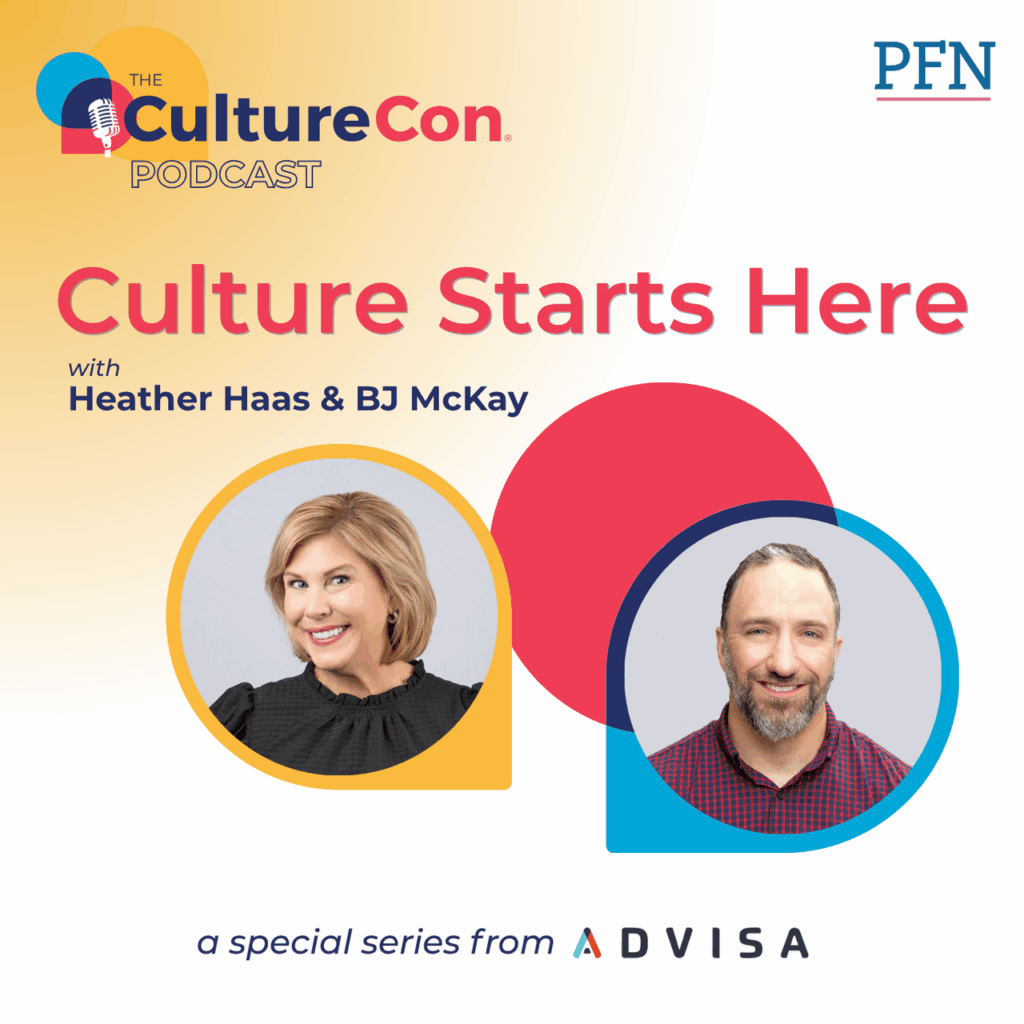
Culture can be an organization’s biggest threat to growth – or its greatest opportunity for competitive advantage.
In Culture Starts Here, a special series on the CultureCon podcast, ADVISA CEO Heather Haas and leadership consultant BJ McKay share insights and tactics you can use to jump-start your organization’s optimal culture. This and every episode of Culture Starts Here includes the answer to the most common question ADVISA’s leadership consultants hear: Where do we start?
All episodes
- Culture Starts Here, Ep1: Meet ATLAS
- Culture Starts Here, Ep2: One thing your C-Suite absolutely can’t delegate
- Culture Starts Here, Ep3: Do Mission, Vision, and Values Really Matter?
- Culture Starts Here, Ep4: Do Your Leaders Know What to Say and Do To Be Effective?
- Culture Starts Here, Ep5: For Leaders, This Can Make the Difference Between a Guess or a Smart Decision
- Culture Starts Here, Ep6: Leaders Are Only as Effective as the Systems That Support Them
- Culture Starts Here, Ep7: What we learned from attending CultureCon
RELATED RESOURCES
ADVISA
- Get your FREE Predictive Index assessment for eye-opening new clarity around how you’re wired
- Get a FREE 5-minute Culture Check to see how your org is doing and where to focus
- Connect with Heather on LinkedIn
- Connect with BJ on LinkedIn
CultureCon
PeopleForward Network
- Other podcasts from PeopleForward Network, the producers of The CultureCon Podcast and Culture Starts Here