
Leaders Are Only as Effective as the Systems That Support Them
Special Guest: Steve Edwards, President & General Manager of City Wide Facility Solutions Indianapolis!
Culture isn’t just something you believe in—it’s something you build.
And one of the fastest ways culture either thrives or breaks down is through the systems that shape how work actually gets done.
In this episode of the Culture Starts Here on The CultureCon Podcast, BJ McKay and Heather Haas sit down with Steve Edwards, President and General Manager of City Wide Facility Solutions, to explore what it really takes to operationalize culture—especially in a fast-growing, people-intensive business.
With nearly 900 customers across Central Indiana, dozens of internal team members, and hundreds of contractor partners representing the brand every day, City Wide offers a powerful real-world example of how culture scales when you have the right systems behind it.
From values on the wall to values in motion
Steve shares that City Wide’s culture didn’t magically appear overnight. It evolved through trial, reflection, and a willingness to learn what worked—and what didn’t.
Early lessons included a familiar trap many organizations fall into: creating values for people instead of with them. Over time, City Wide shifted toward a culture where values are reinforced weekly, discussed openly, and modeled consistently by leaders at every level.
One example: a weekly all-team call where employees publicly recognize one another for living out the organization’s core values. It’s simple, human, and deeply reinforcing.
“The first time I experienced it, I thought, ‘This place is different.’ They actually live and breathe their core values.”
Why systems matter more than slogans
Heather connects Steve’s experience to ADVISA’s ATLAS framework (see below), specifically the final driver: Systems That Support Leaders.
Culture doesn’t live in posters or mission statements—it lives in:
- How people are hired and onboarded
- How performance is discussed
- How feedback flows
- How problems are surfaced and resolved
- How leaders spend their time
Steve explains how City Wide uses consistent meeting rhythms, one-on-ones, ride-alongs, and data-driven check-ins to create clarity and accountability—without forcing compliance.
“If it’s forced, it won’t work. But if people help build it, they’ll own it.”
Turning complaints into culture builders
One of the most compelling insights from the conversation is how City Wide treats complaints—not as failures, but as opportunities.
Every issue is logged, tracked, and followed up at multiple intervals. This system doesn’t just improve service quality—it reinforces trust, responsibility, and care.
“Complaints are opportunities. They show customers—and our team—that we stand behind our work.”
This mindset doesn’t stop with internal employees. It extends to City Wide’s contractor partners, ensuring that everyone representing the brand understands the expectations and feels supported in meeting them.
Scaling culture beyond your payroll
With hundreds of independent contractors delivering services under the City Wide name, Steve shares how culture must extend beyond traditional org charts.
Through structured onboarding, clear expectations, regular inspections, and consistent communication, City Wide ensures that its values are experienced by customers—no matter who is doing the work.
“Culture doesn’t stop at the door. It shows up in how customers experience us.”
Leadership that listens wins
A recurring theme throughout this episode is listening.
Steve emphasizes that thriving cultures are marked by ideas bubbling up from the front lines—not just flowing down from leadership.
“If people stop bringing ideas, that’s when you should worry.”
By creating systems that invite feedback, reward initiative, and support growth, City Wide has built a self-sustaining culture—one where people grow, customers stay, and the business scales with integrity.
Key takeaways for leaders
- Culture becomes real through systems, not slogans
- Consistency builds trust—especially during tough conversations
- Engagement scales when leaders listen, not dictate
- Systems should reinforce humanity, clarity, and accountability
- When culture works internally, customers feel it externally
Want a quick starting point for evaluating your culture?
To help organizations create the culture they need to succeed, ADVISA developed the ATLAS framework – five critical drivers that, when aligned, create cultural competitive advantage. Today, those drivers are the building blocks of the Leader-Led Culture™ system:
- Activate – Build commitment from the top.
- Target – Establish desired future state.
- Lead – Develop confidence and capability.
- Apply – Improve performance with people data.
- Scale – Enable behavior change.
When those five drivers work together, culture stops being abstract. It becomes a practical engine for business performance.
Take the free, 5-minute culture check
Find out where your organization stands today – in just minutes. ADVISA’s online ATLAS Navigator tool gives you a snapshot of strengths and opportunities across the five drivers.
It is a practical conversation starter for leaders, managers, and teams who want to begin aligning culture with strategy.
About Culture Starts Here
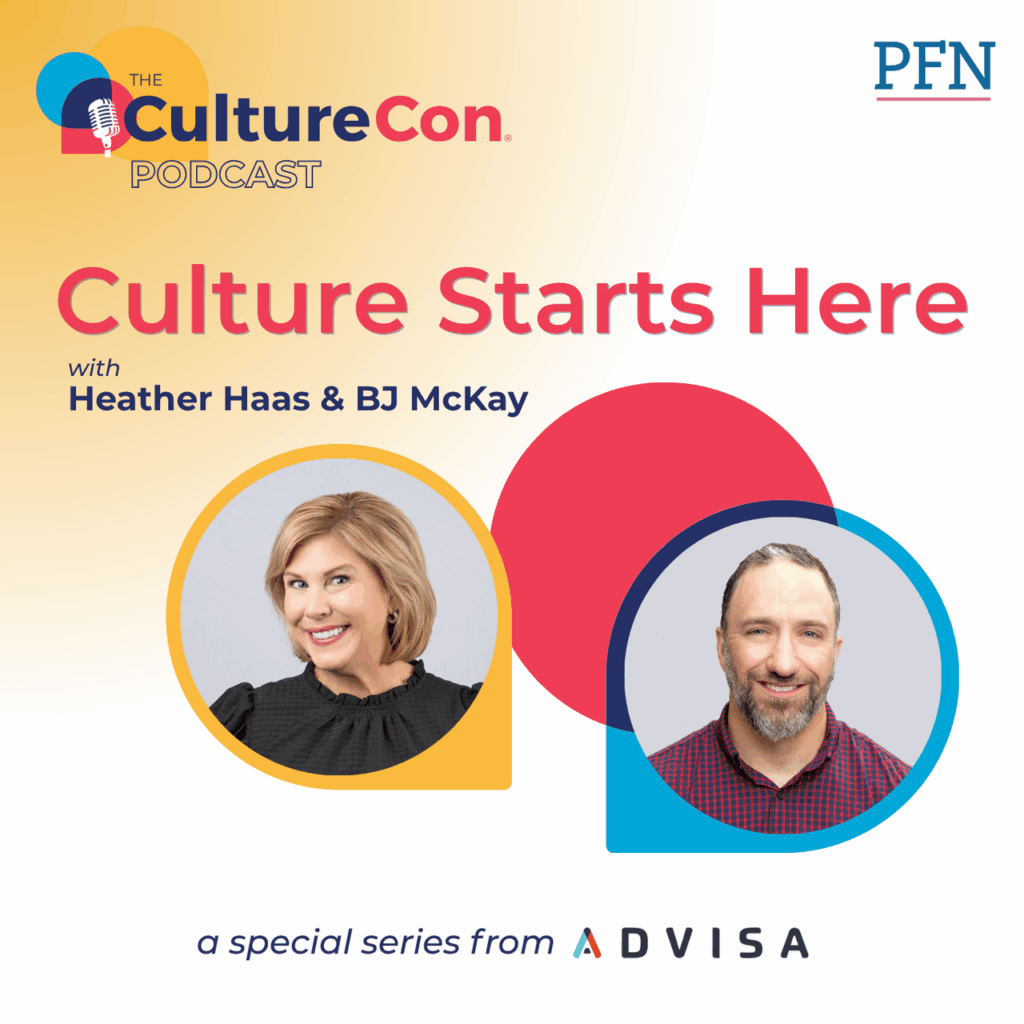
Culture can be an organization’s biggest threat to growth – or its greatest opportunity for competitive advantage.
In Culture Starts Here, a special series on the CultureCon podcast, ADVISA CEO Heather Haas and leadership consultant BJ McKay share insights and tactics you can use to jump-start your organization’s optimal culture. This and every episode of Culture Starts Here includes the answer to the most common question ADVISA’s leadership consultants hear: Where do we start?
All episodes of the Culture Starts Here podcast series
- Ep1: Meet ATLAS
- Ep2: One thing your C-Suite absolutely can’t delegate
- Ep3: Do Mission, Vision, and Values Really Matter?
- Ep4: Do Your Leaders Know What to Say and Do To Be Effective?
- Ep5: For Leaders, This Can Make the Difference Between a Guess and a Smart Decision
- Ep6: Leaders Are Only as Effective as the Systems That Support Them
- Ep7: What we learned from attending CultureCon
- Ep8: What Culture Change Actually Looks Like Inside Organizations
- Ep9: To Lead Is Human
- Ep10: What if Culture Didn’t Eat Strategy?
- Ep11: Leaders Need to Be Led
RELATED RESOURCES
City Wide Facility Solutions
ADVISA
CultureCon
PeopleForward Network
- Other podcasts from PeopleForward Network, the producers of The CultureCon Podcast and Culture Starts Here