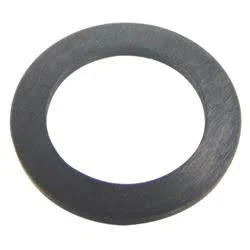
The Rubber Washer Theory
Hello, disaster.
I was halfway through my morning shower when my wife—who is about the calmest person I know—started pounding on the bathroom door like an angry debt collector.
“Turn it off! Turn it off! Turn off the shower!”
Those are not words you expect to hear while shampooing.
I shut off the water, threw on a towel, and followed her downstairs, where water was pouring through a light fixture in our kitchen ceiling.
My mind immediately jumped to worst-case scenarios.
A burst pipe.
A failed drain hidden between two floors.
Major water damage.
Thousands of dollars in repairs.
And now, we wait.
Our plumber was booked solid. So for the next couple of days, my imagination filled in the blanks while we waited for the appointment.
When he finally arrived, he found the culprit within minutes.
Not a burst pipe.
Not a cracked drain.
Not a catastrophic plumbing failure.
A tiny rubber washer inside the bathroom sink faucet hadn’t been sitting perfectly flat beneath the aerator.
Each time we used that sink, water slowly worked its way back into the faucet assembly. Over time, it accumulated until gravity finally won—and the first visible symptom was water pouring through our kitchen ceiling.
All because of a five-cent piece of rubber.
At the time, I had no idea that a plumbing issue would remind me of one of the biggest challenges in organizational alignment.
I couldn’t stop thinking about that.
Not because the repair was expensive.
It wasn’t.
Not because the diagnosis was especially complicated.
It wasn’t.
But because the first thing I noticed wasn’t the problem.
It was the consequence.
Organizations are the same way.
The issues that keep leaders awake at night—turnover, missed goals, weak accountability, slow execution, declining engagement—are often treated as the problem.
But they’re frequently the equivalent of water coming through the kitchen ceiling.
They’re symptoms.
The source often lives somewhere else.
That’s why reacting to visible issues without understanding the system behind them can be so frustrating. You solve one problem, only to watch another appear somewhere else.
Organizational alignment starts with the small things.
Every organization has its own rubber washers.
Not catastrophic failures.
Just small points of misalignment, such as:
- An expectation that was never fully clarified.
- A manager who coaches differently than everyone else.
- A process everyone quietly works around.
- Conflicting priorities between departments.
- An incentive that unintentionally rewards the wrong behavior.
None of those feels urgent on its own. In fact, they’re easy to dismiss because business keeps moving.
Until it doesn’t.
That’s the nature of systems.
Small issues rarely stay small when they’re connected to everything else.
Don’t chase the symptom.
What I appreciate most about our plumber isn’t that he fixed the leak.
It’s that he understood the system.
He didn’t start where the water appeared.
He started where the problem was most likely to have begun.
Leadership requires that same mindset.
No executive can be expected to spot every subtle point of misalignment inside a growing organization. But every executive can build a leadership system—and surround themselves with people they trust—that surfaces those issues before they become expensive, disruptive, or culture-defining.
The goal isn’t to become an expert in everything.
It’s to create an organization that operates so intentionally, small problems are identified while they’re still small.
Before the ceiling starts leaking.
Sustainable organizational alignment doesn’t happen by accident. It’s the result of leaders who consistently reinforce shared expectations, behaviors, and priorities.
That’s one of the reasons I believe so strongly in the Leader-Led Culture™ system.
Healthy organizations don’t wait until water is coming through the ceiling.
They create the clarity, alignment, and leadership discipline to surface small issues before they become systemic ones.
Because here’s the thing…
I’ve been thinking about that little rubber washer ever since.
Not because it flooded my kitchen.
Because it reminded me that the biggest organizational problems rarely begin as big problems.
They begin as small points of misalignment that seem too insignificant to matter.
Until they do.